
Multi-Agent · Multi-Project · Multi-OS · Multi-Machine





简体中文 · Homepage · Documentation
Aikito gives you one place to govern the context your coding agents share.
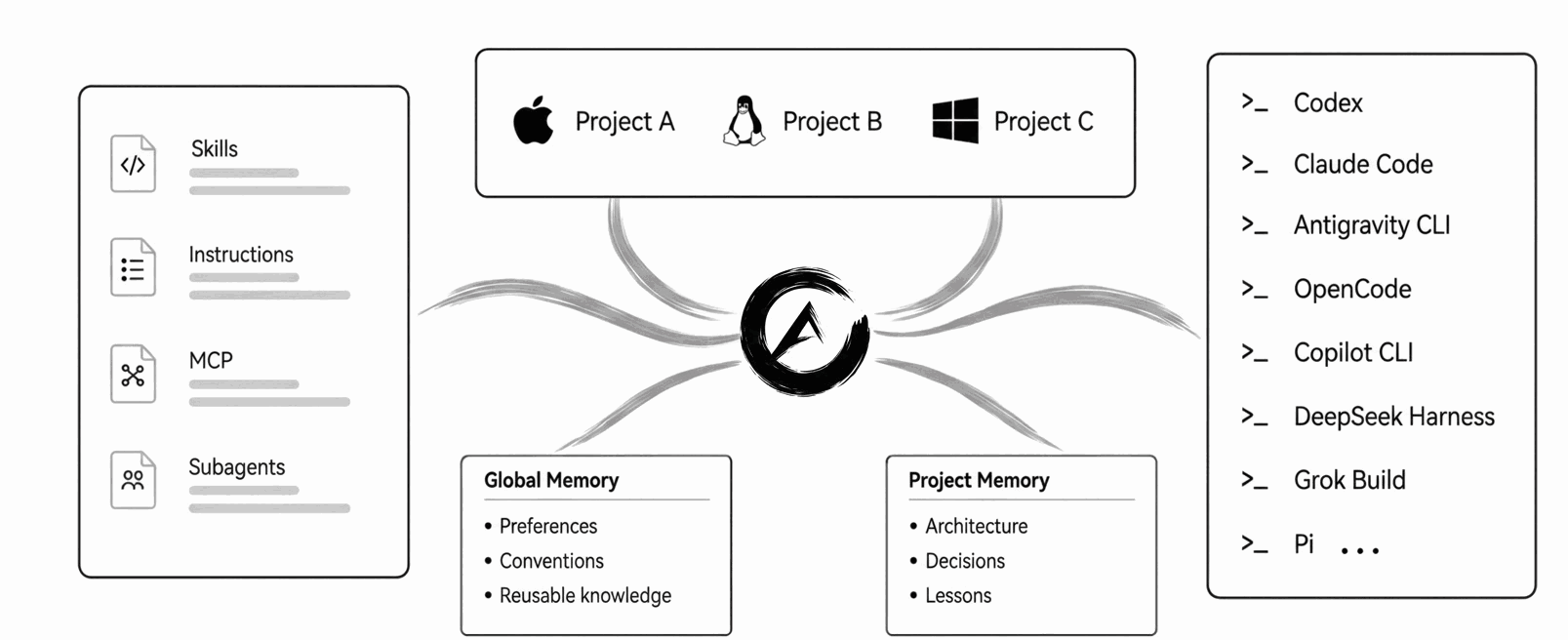
Manage instructions, skills, MCPs, subagents, and durable memory across agents, projects, and machines.
With uv (recommended cross-platform) or Homebrew (macOS / Linux):
uv tool install aikito
# or: brew install lsaint/tap/aikitoBring your existing Agent setup under Aikito in 30 seconds:
aikito init workspace ~/aikito
aikito adopt  # use --dry-run to preview, --verbose for full paths
aikito sync
aikito status
adopt and sync preflight their complete plans before writing. Starting from
scratch? Simply skip aikito adopt.
On Windows, enable Developer Mode and see the Windows installation guide.
Prefer your coding agent set it up? (Click to expand prompt)
Paste this prompt into your coding agent:
Install and configure Aikito from https://github.com/lsaint/aikito. Read the README,
src/aikito/templates/skills/aikito/SKILL.md, and any linked documentation relevant to the setup. Inspect the Agent configuration I already use, initialize the Aikito workspace, adopt supported existing resources, synchronize them through Aikito, and verify the result withaikito status.adoptandsyncpreflight their complete plans before writing. If either command stops, explain the findings and ask before using--skip,--force,--prune, or manually resolving a conflict. Preserve my current setup and do not register a project without my confirmation. If there is nothing to adopt, skip that step and tell me.
aikito status shows synchronized context and durable memory across all agents and projects:
Workspace: ~/aikito (AIKITO_DIR)

┌────────────────────┬──────────────┬────────┬────────────┬───────────┐
│ Agent              │ Instructions │ Skills │ MCP Config │ Subagents │
├────────────────────┼──────────────┼────────┼────────────┼───────────┤
│ Codex              │ ✓            │ 12 ›   │ 1          │ 3         │
│ Claude Code        │ ✓            │ 12 »   │ 1          │ 1         │
│ Antigravity CLI    │ ✓            │ 12 »   │ 1          │ 1         │
│ OpenCode           │ ✓            │ 12 ›   │ 1          │ 1         │
│ GitHub Copilot CLI │ ✓            │ 12 ›   │ 1          │ 1         │
│ DeepSeek Harness   │ ✓            │ 12 ›   │ 1          │ 0         │
│ Grok Build         │ ✓            │ 12 ›   │ 1          │ 3         │
│ Pi                 │ ✓            │ 12 ›   │ –          │ 3         │
└────────────────────┴──────────────┴────────┴────────────┴───────────┘

┌─────────────────┬────────┬───────┬───────────┐
│ Memory Scope    │ Status │ Notes │ Updated   │
├─────────────────┼────────┼───────┼───────────┤
│ Global          │ ✓      │ 6     │ Sep 16    │
│ aikito          │ ✓      │ 12    │ yesterday │
│ blog            │ ✓      │ 8     │ Sep 16    │
│ chat-distiller  │ ✓      │ 5     │ Aug 24    │
└─────────────────┴────────┴───────┴───────────┘

✓ all synced · 8 agents · 12 skills
  31 notes across 4 scopes
Prefer a browser view? Run aikito web for
the local, read-only Console.
AI agent resources fragment in three directions:
- Across tools: each agent invents its own folders, memory formats, and config conventions.
- Across projects: reusable knowledge, skills, and instructions are copied or drift out of sync.
- Across time: valuable decisions and hard-won lessons disappear into ephemeral chat sessions.
Aikito keeps the source files in one personal Git workspace and connects selected resources to each agent and project. No background daemon, vector store, database, or hosted service is required.
The bundled durable-memory skill guides agents to retrieve relevant notes, record verified conclusions, and update stale knowledge. Notes are plain Markdown files versioned by Git.
- Global scope: cross-project preferences, coding conventions, and tool practices.
- Project scope: architecture decisions, API policies, and local workflows.
See memory usage and opt-out and why memory needs a maintainer.
Aikito is local-first and predictable by design:
- Preflight before write:
adoptandsyncsimulate and check operations before modifying files. - Plain files & Git: no background service, no proprietary database, no implicit prompt injection.
- You govern secrets: workspace is a local Git repository; review secrets before pushing.
Detailed safety and boundary references:
Visit the full documentation site or dive into:
- Getting started: installation through adopting your existing setup.
- Workspace and synchronization: directory layout, scopes, and linking model.
- Connect another machine: multi-machine sync and custom paths.
- CLI reference: commands, options, and shell completion.
- Chat Distiller: distill browser AI chats into Markdown notes in your Inbox.
- Troubleshooting: resolving conflicts and synchronization drift.
If you find Aikito useful, you can support its development.