









I’m the creator of Miilo, Praxa, and PII-Codex.
By day, I’m an engineer and research scientist; by night, I’m a writer and computer science professor. My work sits at the intersection of agentic AI, alignment and safety, memory systems, and embodied intelligence. I study how policies, tools, skills, orchestration, and memory architectures shape agent behavior, with a particular focus on making autonomous systems reliable, interpretable, and safe in real-world environments. I also build portable memory architectures that allow agents to carry episodic, semantic, procedural, and schematic knowledge across models and physical platforms. In my embodied AI research, I integrate physiological sensing and multimodal perception to help machines recognize human state and respond appropriately over time. My earlier work examined information disclosure, computational psycholinguistics, social roles, and discourse patterns in online communities. Across these areas, I am interested in how intelligent systems learn from experience, remain aligned under changing conditions, and operate safely within the human, social, and physical worlds they inhabit.
In the past, I've worked on several web, microservice, and AI/ML projects that I've since open-sourced. My work experience includes enterprise API development, distributed network and sensor systems, military helicopter and fixed wing flight training simulators, e-commerce B2B solutions, and benefit administration platforms.
Follow me on X, LinkedIn, Google Scholar, or here on GitHub for updates!















Clarity for work in motion.
Miilo is my open-source observation shell for AI agents and the systems around them. It helps you follow activity, inspect what is happening, and notice when something needs your attention across the computers you use, without replacing the tools you already trust.
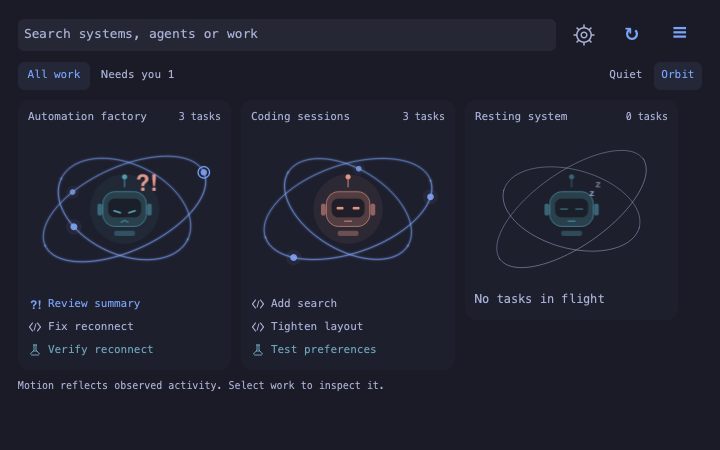
The CLI, Omarchy plugin, and Omalauncher widgets are available now. The mobile app is in development.
Website & demos · CLI · Widgets · Support Miilo

Hedon is a platform- and robot-agnostic robotics stack for affective behavior: it turns multimodal perception (vision, audio, biosignals, and similar) into fused emotional profiles and concrete actions through a vendor-free core (hedon_core) and narrow ports/adapters, not through a single chassis or cloud SDK.
Robot I/O, simulation, and deployment plug in at the edges—Cyberwave twins, Raspberry Pi edge runners, ROS camera feeds, and others—while the same fusion loop, safety-style decisions, and experience logging contract stay stable across targets.
UGV Beast is the reference platform in this repo; optional pem-core (Coming Soon!) integration records ticks and distills longer-term memory without tying Hedon to one operator backend.

Make agent policies explicit, versioned, and easier to evaluate.
Praxa is a research library that treats policy as a first-class object for language-model agents. It represents policies as typed, versioned documents and lets researchers compare ways of putting the same policy into practice, including full-policy prompts, retrieval, and few-shot examples. Keeping the policy fixed lets those methods be compared without rewriting the rules.

An open-source Python library for detecting, categorizing, and assessing the severity of personally identifiable information in text. Published in the Journal of Open Source Software.
I write practical guides for developers, including the Cloud Bytes Collection and Engineering Best Practices for the Agentic Developer.


Browse my books · Research & publications
Find me on X or LinkedIn, or explore more of my work at eidanrosado.com.